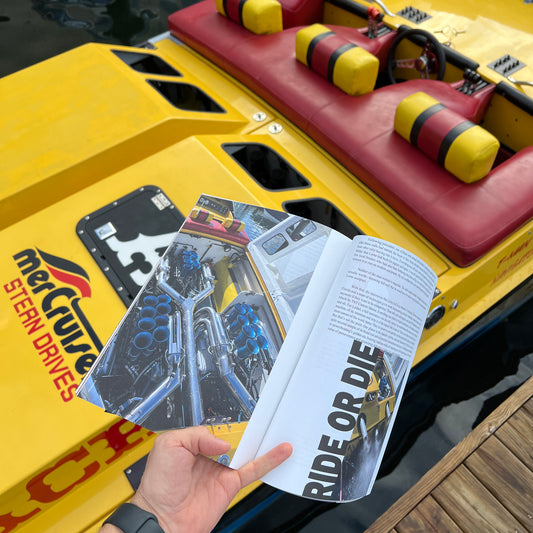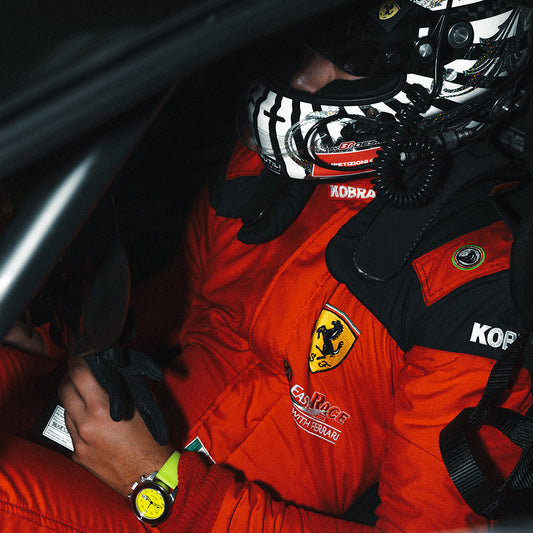

V-drive hot boats emerged in postwar California, where hot-rodders began combining lightweight boat hulls with powerful V8 engines and automotive-style engineering. The V-drive redirects engine power through a transmission and gear case to a propeller shaft running beneath the hull, allowing the engine to sit toward the rear. By the 1950s and '60s, builders like Sanger, Hallett, Hondo, and others were creating lightweight flat-bottom boats capable of more than 100 mph. Racing drove rapid development in engines, gear ratios, propellers, hull design, and safety equipment, while big-block Chevrolets—especially the 454—became iconic powerplants. Casale V-drives became equally important, allowing racers to fine-tune gearing for different setups. By the 1970s, the formula expanded into mini day cruisers that combined usable interiors with serious performance. Although the boating industry changed in the 1980s, V-drives survived through racing, restoration, and enthusiast culture. Their basic formula remains legendary: lightweight hull, big-block V8, mechanical V-drive, carefully chosen propeller, and one question—how fast can it go?
THIS IS A LAKE BOAT, NOT A RACE BOAT.